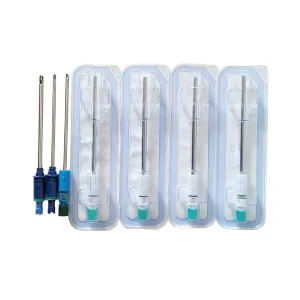
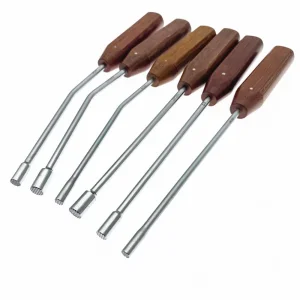
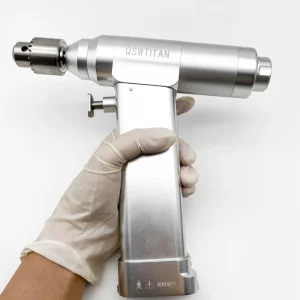
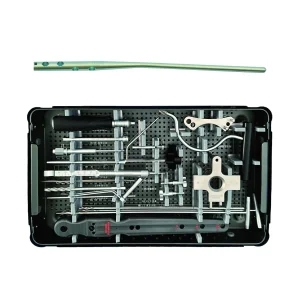
Explore our premium selection of high-precision surgical instruments and Class III titanium alloy implants engineered for optimal clinical outcomes.
Unicompartmental Knee Arthroplasty (UKA), commonly referred to as partial knee replacement, has emerged as a gold standard surgical intervention for patients suffering from single-compartment osteoarthritis of the knee. Unlike Total Knee Arthroplasty (TKA), which involves the complete resection of the knee joint, UKA targets only the diseased compartment—most frequently the medial compartment—while preserving the healthy lateral compartment, patellofemoral joint, and crucial ligamentous structures including the Anterior Cruciate Ligament (ACL) and Posterior Cruciate Ligament (PCL).
From a biomechanical perspective, the preservation of these native ligaments allows the knee to maintain its natural kinematics. Patients undergoing UKA consistently report a more "natural-feeling" joint, superior range of motion, and significantly faster postoperative recovery times compared to TKA. Clinical data indicates that UKA is associated with lower rates of perioperative complications, reduced blood loss, and shorter hospital stays, making it an ideal candidate for outpatient surgery and Ambulatory Surgery Centers (ASCs).
"The clinical success of Unicompartmental Knee Arthroplasty relies heavily on two critical pillars: precise patient selection and the geometric accuracy of the orthopedic implants. As a leading manufacturer, our mission is to deliver implants that replicate natural anatomy with sub-micron tolerances."
However, the technical demands of UKA are exceptionally high. The surgeon must achieve precise alignment and optimal tensioning of the soft tissues to prevent premature wear of the ultra-high-molecular-weight polyethylene (UHMWPE) insert or aseptic loosening of the tibial and femoral components. This demands not only highly sophisticated surgical instrumentation but also implants manufactured to the most rigorous engineering standards. As global healthcare systems shift toward value-based care, sourcing high-quality, cost-effective UKA systems from certified manufacturers has become a strategic priority for orthopedic distributors and hospital networks worldwide.
HBM Medical Apparatus And Instruments Co., Ltd. is a premier, state-of-the-art orthopedic medical equipment R&D, manufacturing, and operation enterprise in China. Founded on October 15, 2015, HBM has established itself as a global leader in the orthopedic implant sector, supported by a robust sales network covering the entirety of China and expanding rapidly across international markets.
Equipped with world-class production machinery and testing equipment, HBM operates a sprawling production facility exceeding 30,000 square meters. Our dedicated team of over 350 advanced processing and testing systems ensures that every implant and instrument we manufacture meets the most stringent international standards. We adhere strictly to the development philosophy of "technological innovation, product innovation, and service innovation," striving continuously to serve the global cause of human health.
Through our motto, "Integrate the Master, Health being achieved," we combine clinical expertise with advanced material science to deliver orthopedic solutions that improve patient mobility and quality of life worldwide.

Leveraging advanced industrial clusters, high-precision machining, and cost efficiencies to deliver world-class orthopedic implants.
We utilize medical-grade Titanium Alloy (Ti6Al4V ELI) and Ultra-High-Molecular-Weight Polyethylene (UHMWPE) sourced from certified global suppliers. Our raw materials feature full traceability, ensuring exceptional biocompatibility, high fatigue strength, and minimal wear rates under physiological loading conditions.
Our manufacturing floor features 120+ high-end Swiss-type lathes and 5-axis CNC machining centers. This advanced machinery allows us to achieve sub-micron dimensional tolerances and flawless surface finishes, which are critical for the articulation interfaces of UKA implants.
With 36 dedicated QA/QC inspectors and a comprehensive testing laboratory, we conduct 100% inspection on critical dimensions. Our quality control system is certified under ISO 13485 and MDSAP, ensuring that every batch of implants shipped meets international regulatory mandates.
Global procurement directors, hospital purchasing groups, and OEM/ODM brand owners face unique challenges when sourcing orthopedic implants. The regulatory landscape is increasingly complex, lead times are highly volatile, and the pressure to reduce costs without compromising clinical efficacy has never been greater. At HBM Medical, we have structured our operations to address these specific pain points directly.
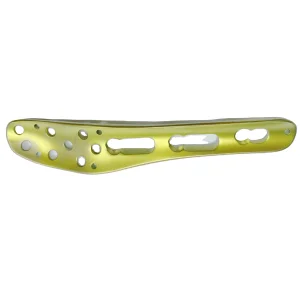
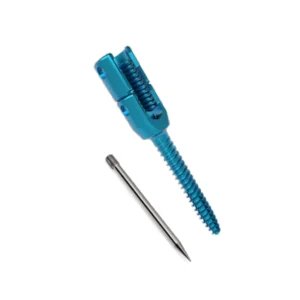
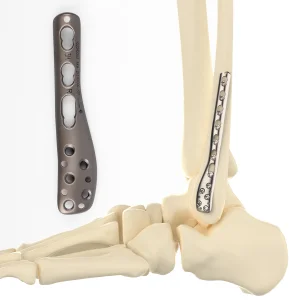
Our OEM/ODM capabilities are highly flexible, offering customized solutions that range from sample processing and graphic-based customization to complete on-demand design and development. Supported by an R&D team of 31 highly educated engineers—including 1 doctorate, 11 postgraduates, and 17 graduates—we launched 25 new products last year alone. This rapid innovation cycle ensures that our partners always have access to the latest advancements in orthopedic design, such as anatomical low-profile bone plates, advanced locking screw configurations, and specialized instrumentation kits.
Furthermore, our supply chain resilience is backed by our extensive manufacturing footprint. With 12 dedicated production lines operating in our 30,343 square meter facility, we maintain a high production capacity that guarantees stable lead times even during periods of peak global demand. We understand that a delay in implant delivery can disrupt surgical schedules and harm patient care; therefore, we prioritize rigorous logistics planning and real-time order tracking for all our international export partners.

Navigating the complex regulatory pathways of different countries is a critical hurdle in the medical device industry. HBM Medical has proactively established a robust quality management system that complies fully with international standards, facilitating seamless market entry for our global partners.
We hold prestigious certifications including ISO 13485, MDSAP (Medical Device Single Audit Program), and multiple CE Certificates (CE EPT 0477.MDR.25/5905 and CE EPT 0477.MDR.25/5973). Under the MDSAP program, our manufacturing facilities undergo rigorous, unified audits that satisfy the regulatory requirements of multiple jurisdictions, including the United States (FDA), Canada (Health Canada), Australia (TGA), Brazil (ANVISA), and Japan (PMDA).
This high level of regulatory readiness drastically reduces the time-to-market for our distributors, ensuring that our Unicompartmental Knee Arthroplasty systems and associated surgical instruments can be rapidly registered and deployed in major healthcare markets globally.
The clinical utility of our orthopedic instruments and implants spans a diverse range of healthcare environments, each with unique operational demands. By understanding these localized application scenarios, we tailor our manufacturing and support services to maximize efficiency and patient outcomes.
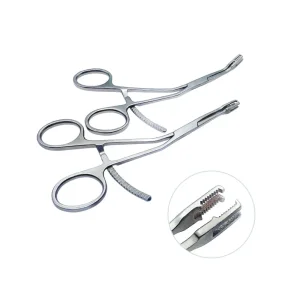
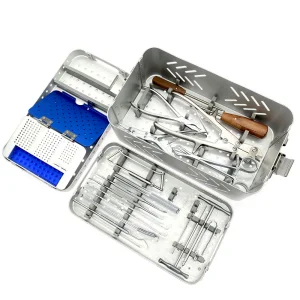
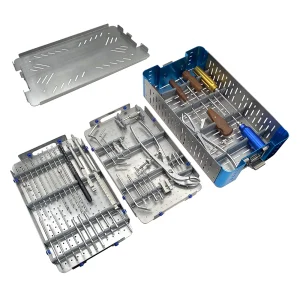
In highly developed healthcare markets such as North America and Western Europe, there is a massive shift toward performing joint replacements in outpatient settings. Unicompartmental Knee Arthroplasty is perfectly suited for ASCs due to its minimally invasive nature. Our streamlined UKA surgical instrument kits are designed to minimize sterilization tray volume, reducing processing costs for ASCs while ensuring that surgeons have all necessary high-precision tools—such as bone plate forceps, tibial plateau bone graft forceps, and specialized bone drills—readily available in a single, compact container.
For large-scale public hospital networks and private hospital groups in Southeast Asia and Eastern Europe, cost-effectiveness and long-term implant survivorship are the primary purchasing drivers. HBM's Class III titanium alloy implants, backed by lifetime warranties, provide the perfect balance of premium quality and competitive pricing. Our ability to provide comprehensive raw material traceability and rigorous batch testing reports ensures that our products easily pass the strict technical evaluations of national healthcare tenders.
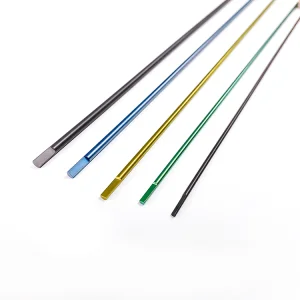
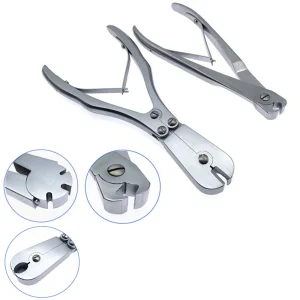
The principles of joint preservation and rigid fixation are equally critical in veterinary medicine. Our specialized small-fragment instrument kits, Kirschner wire cutters, and multifunctional surgical drills are widely utilized by veterinary surgeons globally to treat complex fractures and joint degeneration in companion animals and equine athletes. By offering versatile, high-durability instruments, we support veterinary clinics in delivering advanced orthopedic care.
Staying ahead of the curve with cutting-edge technological integrations and next-generation implant designs.
The integration of robotic systems in UKA is rapidly increasing, offering unprecedented precision in bone resection and implant positioning. HBM is actively collaborating with robotic surgery developers to design specialized implant interfaces and tracking arrays that seamlessly integrate with next-generation surgical robots.
By utilizing preoperative CT or MRI scans, 3D-printed patient-specific cutting guides can be created for each unique anatomy. This eliminates several surgical steps, reduces operating room time, and assists the surgeon in achieving perfect alignment of the UKA components.
Research into highly cross-linked polyethylene infused with Vitamin E (highly resistant to oxidation and wear) and highly porous titanium structures for enhanced biological fixation (bone ingrowth) represents the future of implant longevity. HBM's R&D team is at the forefront of these material sciences.
Get answers to the most common technical, regulatory, and commercial questions regarding our orthopedic manufacturing capabilities.
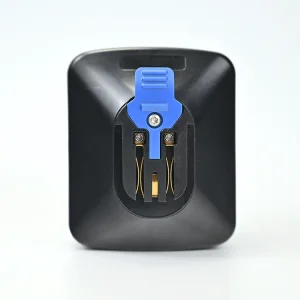
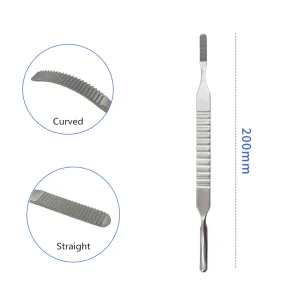
Browse our extensive range of orthopedic trauma, spine, and joint preservation instruments designed for maximum clinical precision.
 HBM Medical